
When an offshore compressor trips unexpectedly in the Gulf of Mexico, the loss recorded is never just hours of lost production. Siemens' True Cost of Downtime 2024 report puts unplanned downtime losses across the world's 500 largest companies at roughly 1.4 trillion US dollars a year, and that figure has risen 62 percent since 2019 even as the number of incidents has actually fallen [1]. The cost per event is climbing, not because failures are happening more often, but because assets have grown more complex and the consequence of each failure has grown more expensive. For world-class oil and gas operators, numbers like these are not slide material for an annual review. They are the reason reliability sits as a core business function on equal footing with production and finance, rather than a support department that gets called in after something breaks.
Downtime is expensive, and the failure pattern behind it is counterintuitive
Verdantis' downtime cost modeling places unplanned downtime at roughly 250,000 US dollars per hour for mid-to-large oil and gas operations, depending on facility complexity, with asset-intensive sites losing an estimated 56 million US dollars a year to unplanned events [1]. Those figures matter, but the number that shapes strategy at global operators more than any other is older and less discussed: the classic Nowlan and Heap research underpinning Reliability Centered Maintenance (RCM) found that roughly 83 percent of equipment failures follow a random pattern rather than an age-related one [1].
That finding changes how leading operators approach preventive maintenance. If most failures have no correlation with age, replacing components on a fixed calendar schedule wastes money and introduces new risk, since every teardown creates a chance of reassembly error. Operators that have internalized RCM shift toward strategies driven by actual equipment condition rather than calendar dates alone. This is not an argument against preventive maintenance, but an argument for proportion: put it alongside condition monitoring rather than treating it as the default strategy for everything.
Predictive maintenance is a data discipline, not a digital project
Deloitte research cited in downtime analyses from MaxGrip and Verdantis shows that mature predictive maintenance programs can cut unplanned failures by up to 70 percent compared with a purely reactive approach [1]. That result rarely comes from sensor investment alone. Operators that run condition-based maintenance (CBM) programs successfully treat vibration data, oil analysis, and thermography as inputs into one decision system, not as separate reports that get read once and filed away.
What separates a program that actually runs from one that stalls at the pilot stage is discipline in closing the loop from data to work order. The same body of research notes that field technicians spend only 25 to 35 percent of a shift on hands-on work at the equipment itself, with the rest lost to administration, parts sourcing, or waiting on work permits [1]. Operators with a mature reliability culture attack that number directly, because even the best predictive maintenance program is useless if a sensor finding does not reach a technician's hands within a window that still matters.
Culture is the foundation, not an add-on to the technical program
Saudi Aramco's reliability excellence model for its Abqaiq complex explicitly frames three pillars as inseparable: asset management programs, predictive and reliability tools, and human competency [4]. The point they emphasize is not sequencing but dependency: none of these three elements, in their framing, delivers the intended results without a reliability-focused culture across the organization, one that includes two-way communication between field operators and management and sustained competency development [4].
Governance structure at global operators typically places the reliability engineer at the same daily operations table as the production engineer, rather than calling reliability in only after an incident.
Incentives and KPIs are designed so reliability metrics, such as mean time between failure and scheduled work backlog, appear in the same report as production numbers rather than in a separate HSE report that rarely reaches the board.
Competency development runs as a formal career track rather than occasional training, so senior reliability engineers have a clear progression path and are less likely to leave once their expertise matures.
What Indonesian operators can take from this data
Put together, this data offers a framework that does not depend on a large budget to start applying. Measuring MC/RAV and comparing it against industry benchmarks, even only internally across similar facilities, gives a far more persuasive language in front of management than narrative reporting alone [3]. Restructuring field technician time so wrench time moves up from the roughly 30 percent range often delivers faster impact than a new sensor investment [1]. Placing reliability at the same table as production, rather than as a unit summoned after a failure, is a structural change that requires firm management decisions rather than heavy capital [4]. World-class oil and gas operators are not reliable because their technology is more advanced. They are reliable because reliability data is treated as a business language equal to production and finance figures, and that is an organizational choice, not a resource constraint.
None of this framework needs to be built from a blank page. Cliste Rekayasa Indonesia works with Indonesian operators on exactly this transition, building the internal measurement discipline (MC/RAV tracking, wrench time studies, RCM-based maintenance strategy) and the governance structure that lets reliability data carry the same weight as production and finance figures in front of management. For a plant or platform team that already has the technical talent but lacks the benchmarking data, the FMEA-to-executive narrative, or the change management to shift a maintenance department from reactive to disciplined, that is the specific gap Cliste Rekayasa Indonesia is built to close, working alongside existing engineering teams rather than replacing them.
Let’s Build a More Reliable Future.
Author: Jen Megah Bremanda Sembiring (Reliability Engineer)
References
- Unplanned Downtime Cost & Recovery 2026, Verdantis, citing Siemens True Cost of Downtime 2024, Aberdeen, Deloitte, and Nowlan & Heap failure-pattern research, 2026.
- Production Efficiency & Uptime Reliability Study: Worldwide Operations Analysis, Solomon Associates.
- Maintenance Cost as a Percent of RAV: Benchmarks by Industry, ReliaMag, citing Solomon Associates and SMRP data.
- Abqaiq Plants Maintenance & Reliability Excellence Model, Reliabilityweb, Saudi Aramco presentation.
Found this useful?
Discover more insights
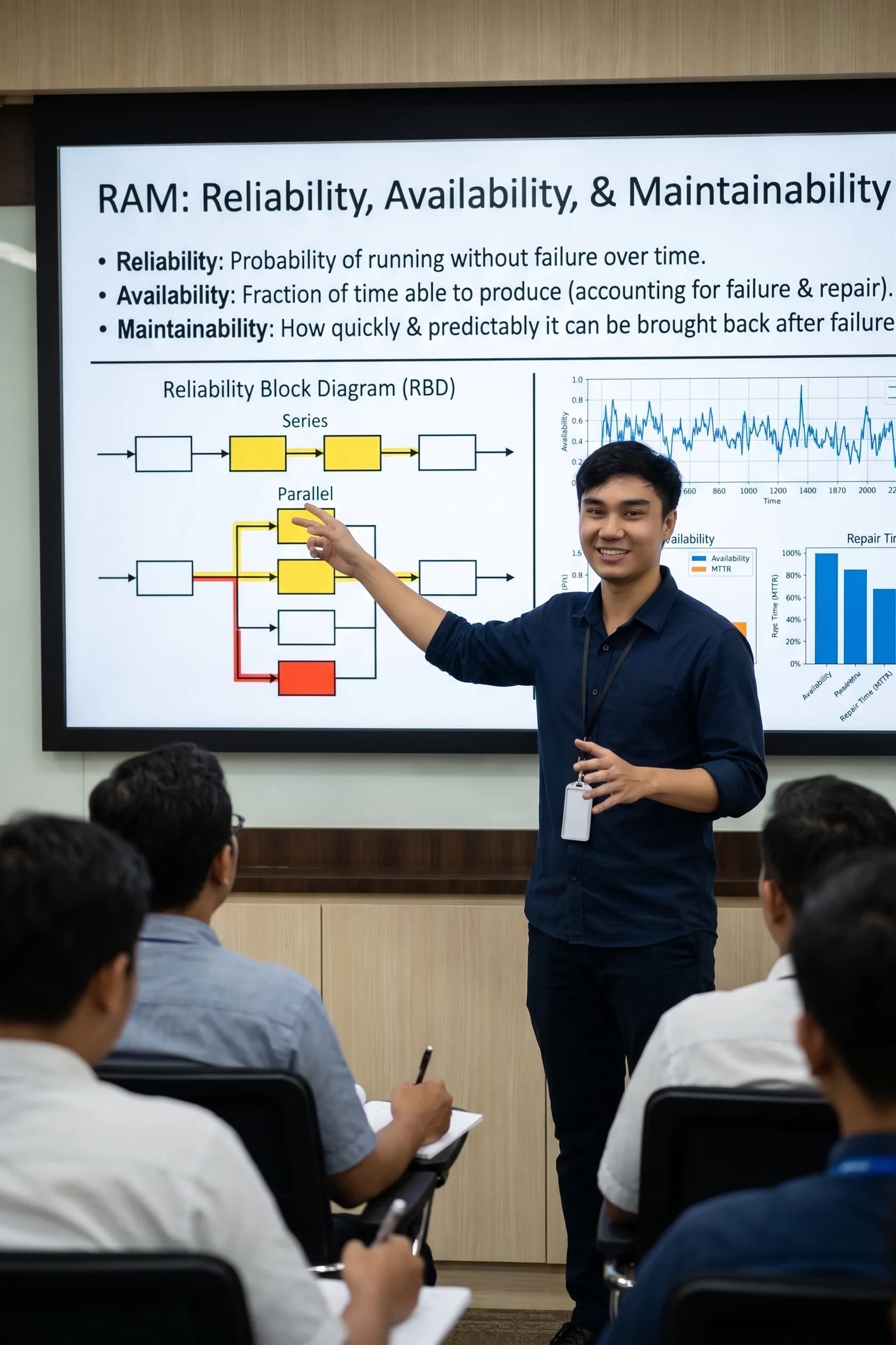
Equipment Reliability Numbers Don't Tell You What the System Will Produce
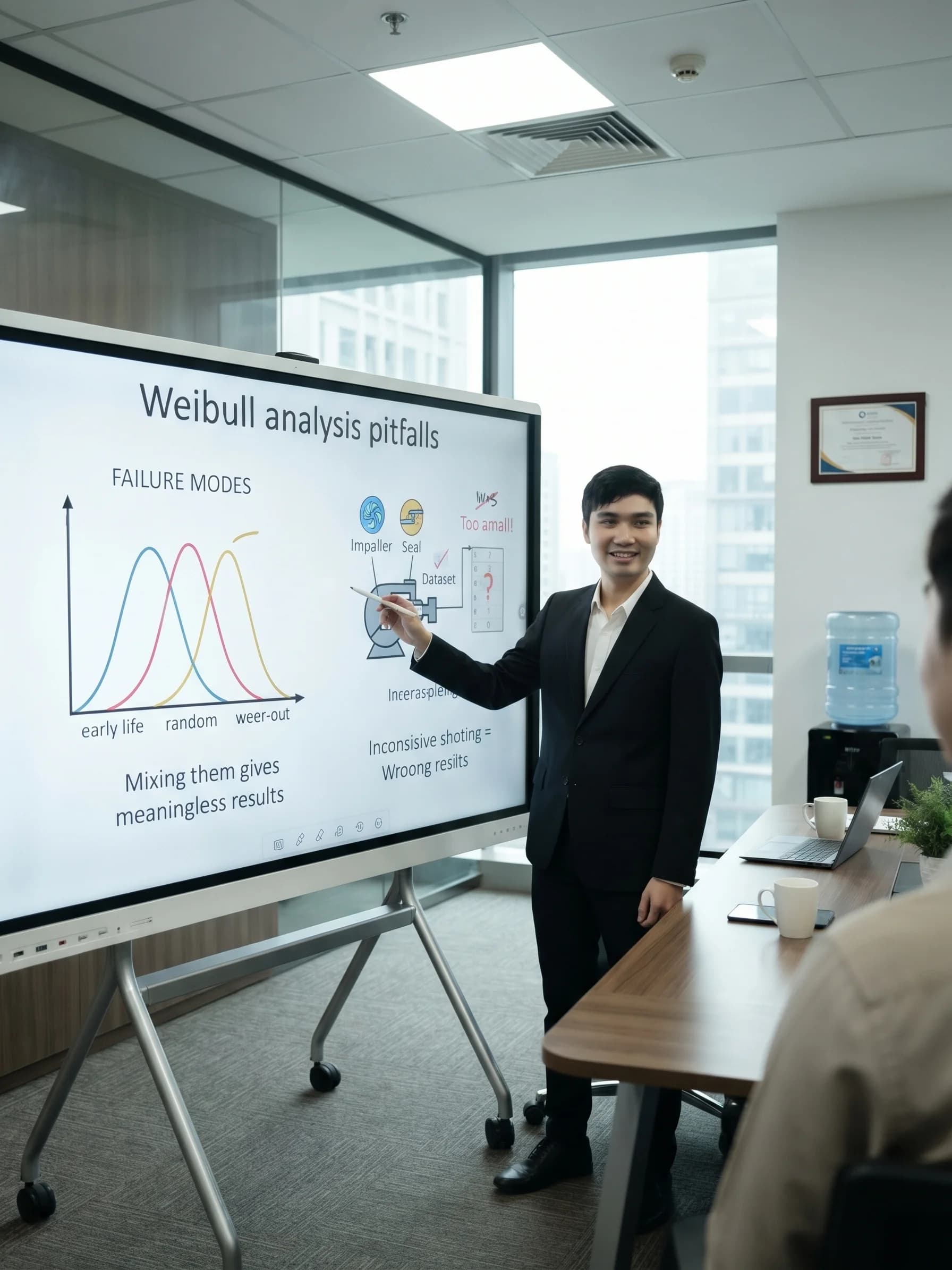
Why Most Weibull Curves in Maintenance Reports Are Wrong

Flare Gas Recovery Belongs on the Maintenance Schedule, Not the Sustainability Slide Deck
Explore More
Discover deeper perspectives and insights.
Explore more insights
Discover deeper perspectives from our experts.