
Transforming Aging Assets into Competitive Advantages in Indonesia’s Oil & Gas Sector
Author: Jen Megah Bremanda Sembiring (Reliability Engineer)
In the global race toward energy security, the oil and gas industry faces a profound paradox: while the demand for hydrocarbons remains resilient, new discoveries are becoming harder to reach. In Indonesia, this challenge is intensified by a national mandate to hit 1 million barrels of oil per day (bbl/d) by 2030.
According to recent industry data, the Indonesian energy sector is undergoing a structural transformation. The focus is pivoting from the drill bit to the digital sensor, marking the rise of Reliability-Centered Maintenance (RCM) as the industry's new North Star.

1. The Market Pivot: Beyond Heavy Construction
By 2025, heavy construction (pipelines, LNG terminals, and gas plants) still commanded a 51.60% share of the Indonesian market (Mordor Intelligence, 2026). However, the true momentum lies in Maintenance and Turn-Around (MTA) services. This segment is projected to grow at a 6.05% CAGR, outstripping overall industry output (Mordor Intelligence, 2026).
This growth is driven by necessity. Approximately 70% of Indonesia’s oil and gas wells are now classified as mature (Mordor Intelligence, 2026). In these aging environments, the margin for error is non-existent. A single unplanned shutdown in a declining field can render an entire project uneconomical. Consequently, operators are moving away from reactive "fix-on-failure" models toward predictive, data-driven servicing.
2. Reliability as the Modern Profit Center
Reliability engineering is no longer just a technical checkbox, it is a financial imperative. When assets reach their twilight years, maximizing the Mean Time Between Failures (MTBF) becomes the primary lever for profitability.
The results of this shift are already visible in Indonesia. In the Mahakam block, the deployment of predictive analytics has successfully reduced pump failures by 18%. By identifying failure modes before they occur, operators have stabilized production profiles and drastically reduced expensive emergency mobilization costs. Furthermore, the use of drones and crawler robots for flare stack inspections has allowed for critical safety oversight without the need for a total facility shutdown, saving millions in potential lost production.
3. Learning from the North Sea and Gulf of Mexico
Indonesia’s transition mirrors the evolution of the world's most mature energy basins. In the North Sea, where operational costs are among the highest globally, the integration of Asset Performance Management (APM) and Digital Twins has cut O&M expenses by up to 20% (Hexagon PPM/Global Industry Standards).
Similarly, in the Gulf of Mexico, AI-driven reliability platforms have reduced unplanned downtime by 30% to 50% (DNV/Global Reliability Benchmarks). Globally, the industry is proving that "Life Extension" for aging assets is not just possible, it is highly lucrative when managed through the lens of technical integrity and international standards like ISO 55000.
4. The USD 300 Million Frontier: Decommissioning and Integrity
As platforms reach the end of their design life, a new market is emerging. By 2030, at least 12 offshore platforms in Indonesia are scheduled for retirement, unlocking a USD 300 million market for decommissioning and Plug-and-Abandon (P&A) contracts (Mordor Intelligence, 2026).
This stage of the asset lifecycle requires a unique form of reliability. Service providers who utilize Digital Twins to assess structural integrity during the dismantling phase secure a major competitive edge. This ensures that environmental risks are mitigated and that the process aligns with strict local-content (TKDN) rules, proving that reliability is essential from the first day of production to the final day of abandonment.

5. How Cliste Rekayasa Indonesia Accelerates Your Asset Excellence
As the industry shifts toward this high-efficiency, reliability-driven era, Cliste Rekayasa Indonesia provides the engineering intelligence and digital infrastructure needed to navigate these complexities. We bridge the gap between legacy hardware and modern data storytelling.
1. Strategic Reliability Consulting
We help operators transition from reactive maintenance to a world-class reliability culture. Our expertise in technical frameworks—including FMEA, RCM, RBD, and RCA—allows us to pinpoint systemic failure causes and align your work processes with ISO 14224 and ISO 55000 standards. We don't just fix equipment; we fix the system that maintains it.
2. Asset Integrity & Reliability Management System Platform
Our digital platform is an end-to-end asset management solution designed specifically for the engineering analytics required in today’s mature basins.
3. Navigating the Decommissioning Lifecycle
With the impending retirement of offshore assets, Cliste Rekayasa Indonesia offers specialized engineering services to manage the decommissioning process. By coupling Digital Twin technology with precise reverse engineering, we ensure that the transition from production to abandonment is safe, cost-effective, and fully compliant with local and international regulations.
6. Conclusion
The future of Indonesian Oil & Gas belongs to those who can master the art of reliability. At Cliste Rekayasa Indonesia, we are committed to being your partner in this transformation, ensuring that your assets remain safe, efficient, and profitable for decades to come.
Let’s Build a More Reliable Future.
Contact us now!
Found this useful?
Discover more insights

The Data Behind How Global Oil and Gas Operators Build a Reliability Culture
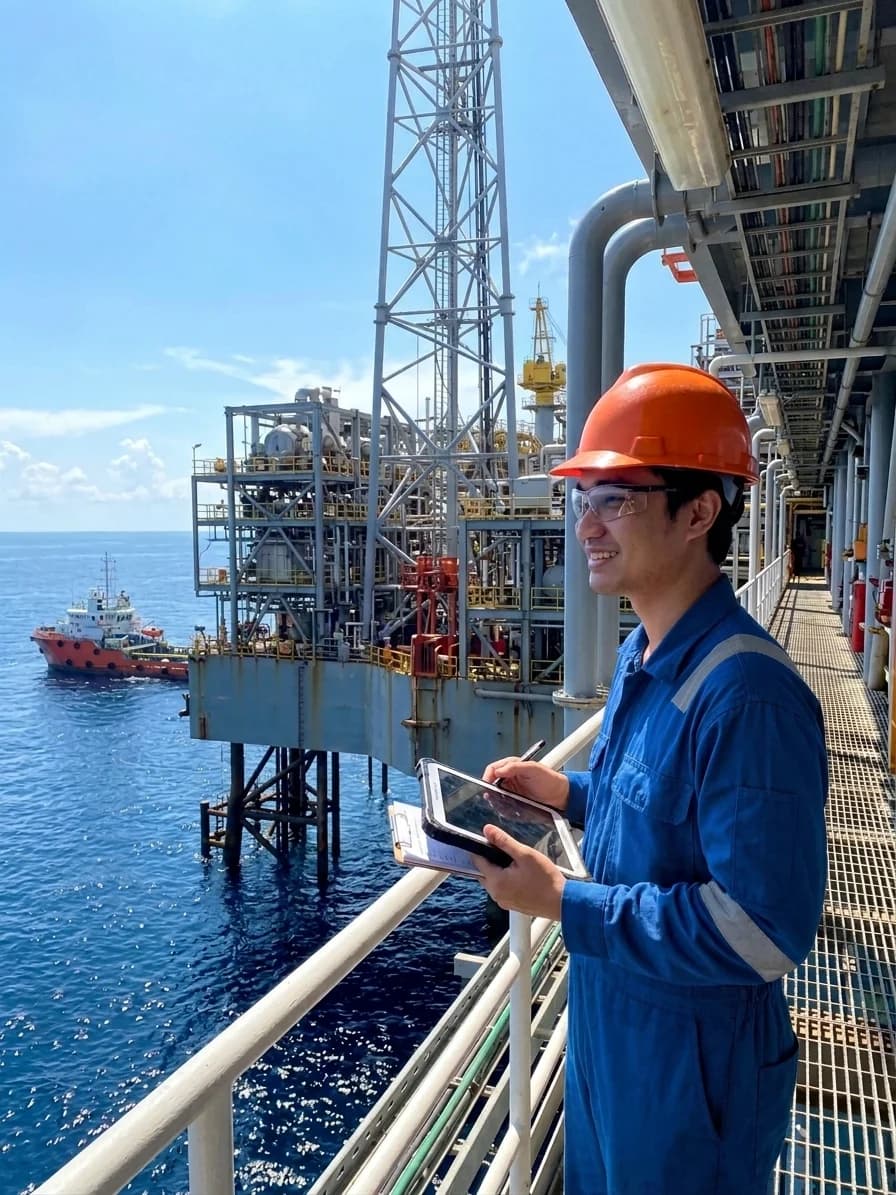
Subsea Reliability Strategy for Indonesia's Ultra-Deepwater Gas Hubs
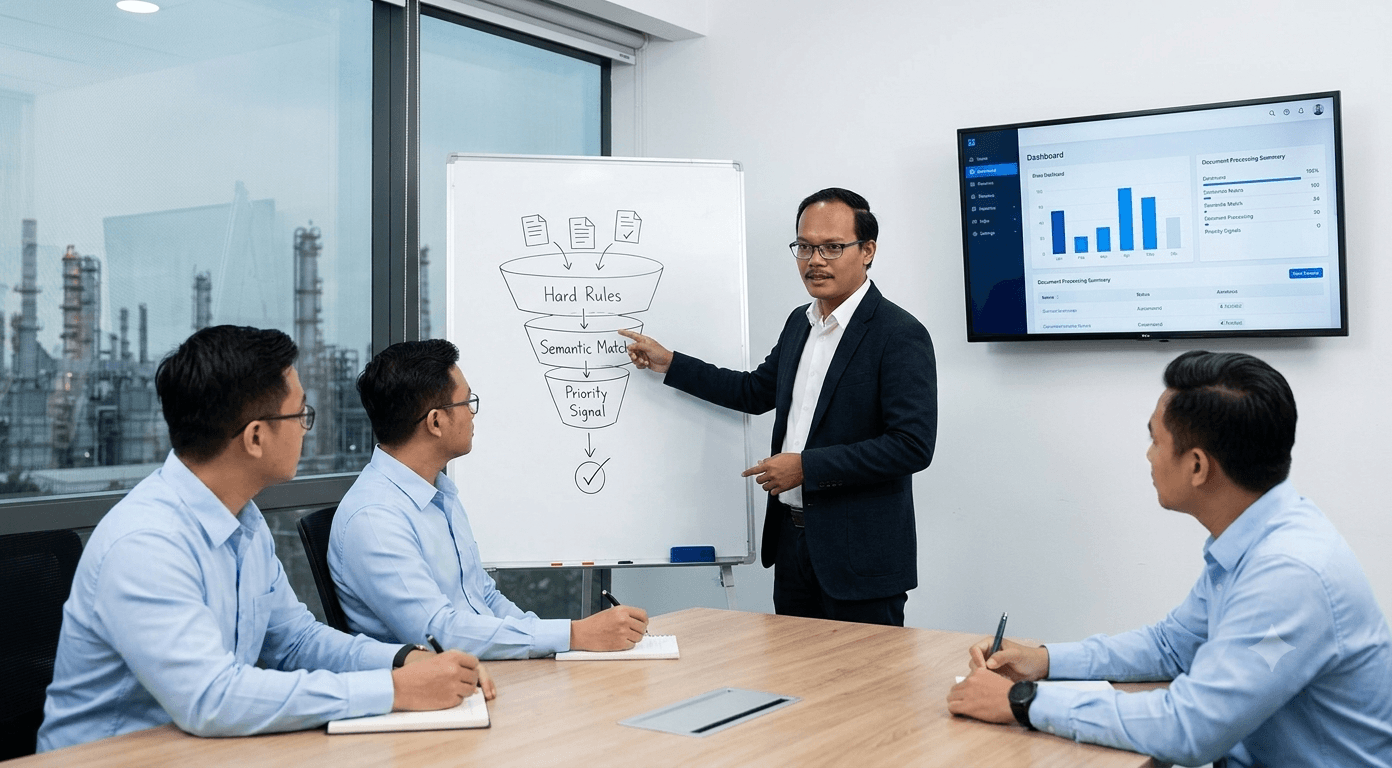
AI Isn't Just for Chatbots: A Case Study in Automated Screening Systems
Explore More
Discover deeper perspectives and insights.
Explore more insights
Discover deeper perspectives from our experts.