In the realm of Asset Management, professionals often invest significant resources into perfecting maintenance strategies, refining Reliability Centered Maintenance (RCM) or optimizing Preventive Maintenance (PM) schedules. However, an impeccable maintenance plan is effectively paralyzed if the required component is unavailable when a failure occurs.
The reality is that availability is not just a function of how often things break, but how quickly they can be restored. A poorly executed spare parts strategy is often the silent "bottleneck" that transforms a routine repair into a catastrophic period of downtime.

1. The Distinction: Critical Spares vs. Insurance Spares
A common technical pitfall is treating all inventory with a "one-size-fits-all" approach. To maintain high reliability, a clear distinction must be made based on risk:
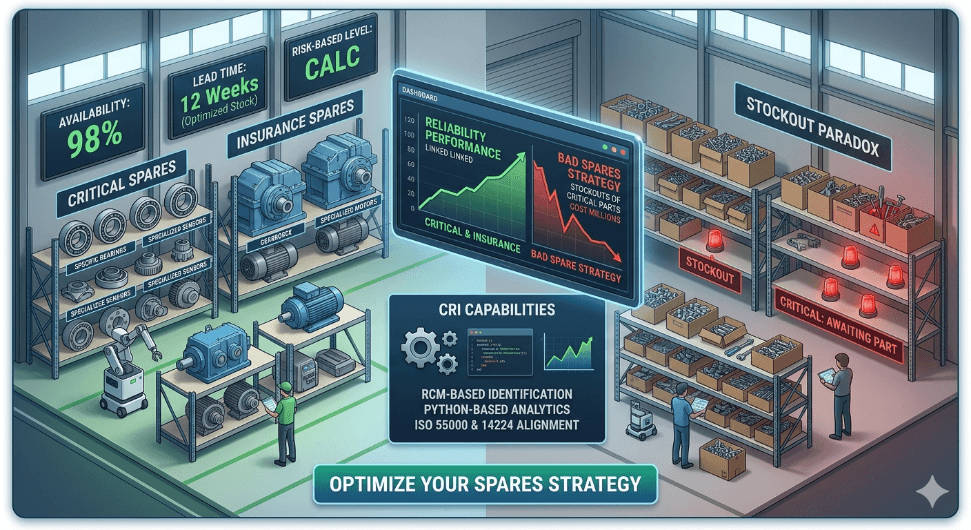
- Critical Spares: These are high-turnover components with a direct impact on production. Their absence causes immediate operational stoppage.
- Insurance Spares: These are parts with a very low probability of failure but an extremely high consequence. Often, these items have lead times exceeding 6 to 12 months.
2. Lead Time vs. Risk-Based Stocking
Traditional inventory management often relies on "Min-Max" levels based on historical consumption. However, for high-reliability assets, we must pivot toward Risk-Based Stocking.
This involves calculating the Stockout Risk, which is the mathematical intersection of the Probability of Failure (PoF) and the Supplier Lead Time. If a critical pump bearing has a lead time of 20 weeks, but the asset’s MTBF (Mean Time Between Failure) suggests a failure could occur sooner, holding zero stock is a direct threat to the plant's availability.
3. The Overstock vs. Stockout Paradox
Many organizations fall into the "Overstock vs. Stockout Paradox." Out of fear of downtime, they over-purchase non-critical items, tying up working capital in "dead stock."
Research from the Journal of Quality in Maintenance Engineering indicates that in many capital-intensive industries, 20% to 30% of inventory is often obsolete or "never used," yet the facility still experiences stockouts of the 5% of parts that actually matter.
This imbalance destroys reliability performance in two ways:
- Stockouts: Increase the Mean Time To Restore (MTTR) exponentially.
- Overstock: Drains the maintenance budget, reducing the capital available for proactive health monitoring or asset upgrades.
4. Technical Insight: The "Hidden Cost" of 1% Unavailability
To put this into perspective, consider a high-value asset in the energy sector. If a bad spares strategy increases the MTTR such that total availability drops by just 1%, the financial impact is not merely the cost of the part.
Using a standard calculation:
Annual Loss = (Total Capacity x Price per Unit) x (0.01)
In many industrial contexts, this 1% gap can represent millions of dollars in lost revenue, far outweighing the holding cost of a well-calculated spare parts inventory.
5. Conclusion
Reliability does not end at the maintenance manual; it extends into the warehouse. To achieve world-class performance, organizations must align their ISO 55000 principles with a rigorous, data-driven spares strategy.
It is time to stop viewing spare parts as a procurement headache and start seeing them as a fundamental pillar of asset reliability & integrity.
6. How CRI Bridges the Gap Between Maintenance and Inventory
At Cliste Rekayasa Indonesia (CRI), we understand that reliability is a multidisciplinary challenge. Our team of reliability engineers specializes in transforming "reactive warehousing" into a strategic asset through a combination of advanced analytics and international standards.
We solve the spares bottleneck through:
- RCM-Based Spares Identification: We don't just look at historical usage. We use Reliability Centered Maintenance (RCM) and FMEA frameworks to identify which parts are truly critical based on their failure modes and consequences.
- Data-Driven Inventory Optimization: Moving beyond simple Min-Max levels, we utilize Python-based analytics and probabilistic modeling to calculate optimal stock levels that balance the cost of holding against the risk of production loss.
- ISO 55000 Alignment: We help your organization integrate spare parts management into a broader Asset Management System, ensuring that procurement, warehouse, and maintenance departments speak the same language of risk and value.
- Reliability Analytics Asset Management Platform: Through our digital solutions, we can provide real-time insights into your asset health, allowing for proactive spare parts preparation long before a failure occurs.
Don't let a missing component lead to a million-dollar shutdown.
Consult with our experts at Cliste Rekayasa Indonesia today!
Author : Jen Megah Bremanda Sembiring (Reliability Engineer)
Discover more insights
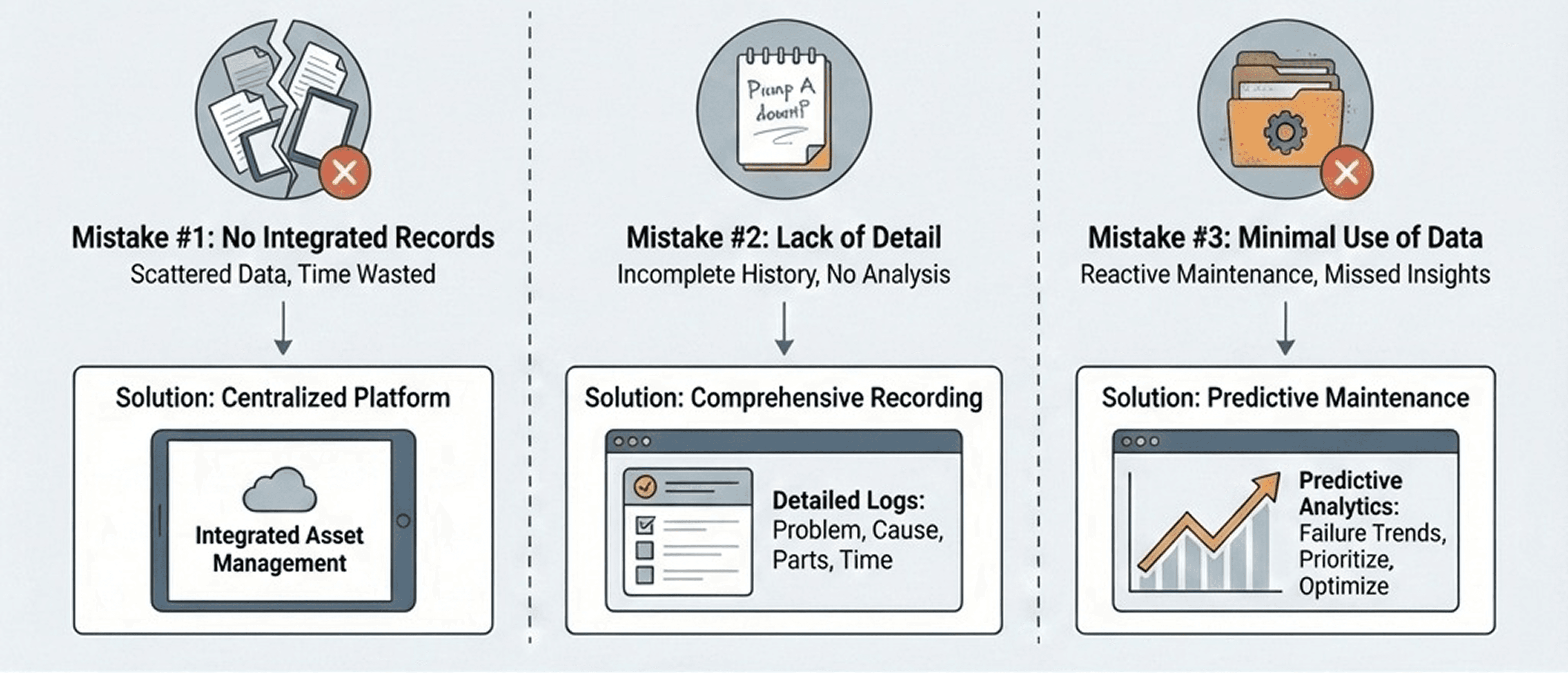
3 Common Asset Recording Mistakes in Oil and Gas Plants and Their Solutions

How Predictive Maintenance Prevents Offshore Equipment Failures
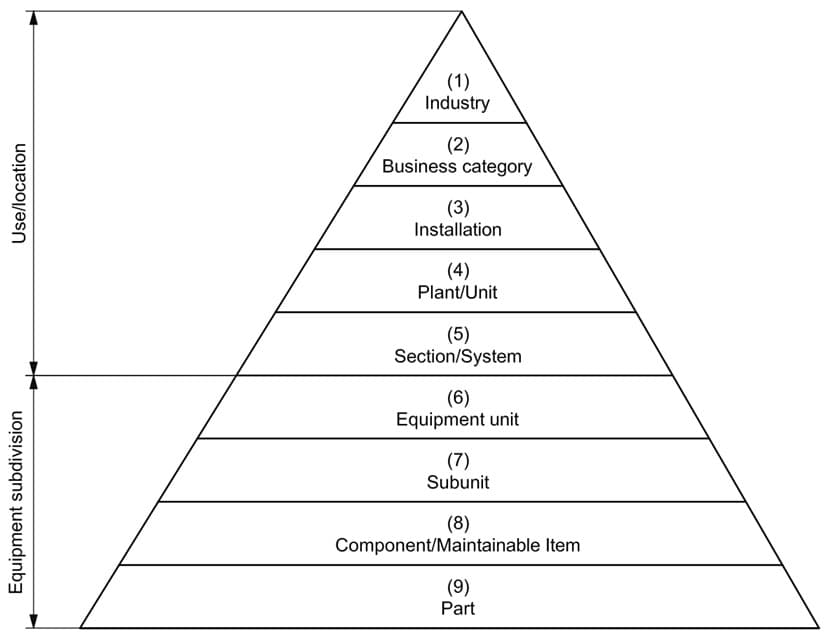
Understanding the Importance of an Asset Register
Explore More
Discover deeper perspectives and insights.
Explore more insights
Discover deeper perspectives from our experts.